
The AI Operating System for Your Organization
An intelligent AI harness that connects your tools, files, agents, and workflows—helping every user work, search, learn, and automate using natural language.

Think of it like Windows Server or Linux
This is an AI Operating System, or in modern terms, an AI harness.
Just as applications are built and installed on Windows or Linux, AI solutions, tools, agents, and workflows can be installed and managed on this platform.
It provides an organizational workspace with users, roles, and permissions.
Each user can log in and have their own:
- AI agents
- Workflows
- Tools
- Knowledge
- Monitors
- Reports
An Intelligent System
It uses agentic loops and multiple AI models to think, plan, and complete tasks.
You teach it, and it remembers.
It understands:
- What it can do
- How it is performing
- How to guide you
- What it has learned
You can inspect its memory, correct it, and teach it again.
It Learns From Your Goals
You give it a goal, and it helps determine how to achieve it.
Over time, it studies how you use the system.
It can:
- Identify important topics from your inputs
- Research those topics
- Discover new information
- Recommend actions and improvements
Talk to Any Tool Using Natural Language
It allows you to communicate with tools and systems in your environment using normal words and sentences.
It can become a specialist for each connected solution.
You do not need to understand every command, API, or technical interface.
Complex engineering tasks become simple conversations.
Talk to Your Organization’s Files
Imagine a shared drive containing thousands of files and folders.
Instead of manually searching through them, you can ask an AI agent:
- What does this file contain?
- Where can I find a specific document?
- Summarize this folder.
- Find every reference to a name, IP address, company, or incident.
- Locate information stored several years ago.
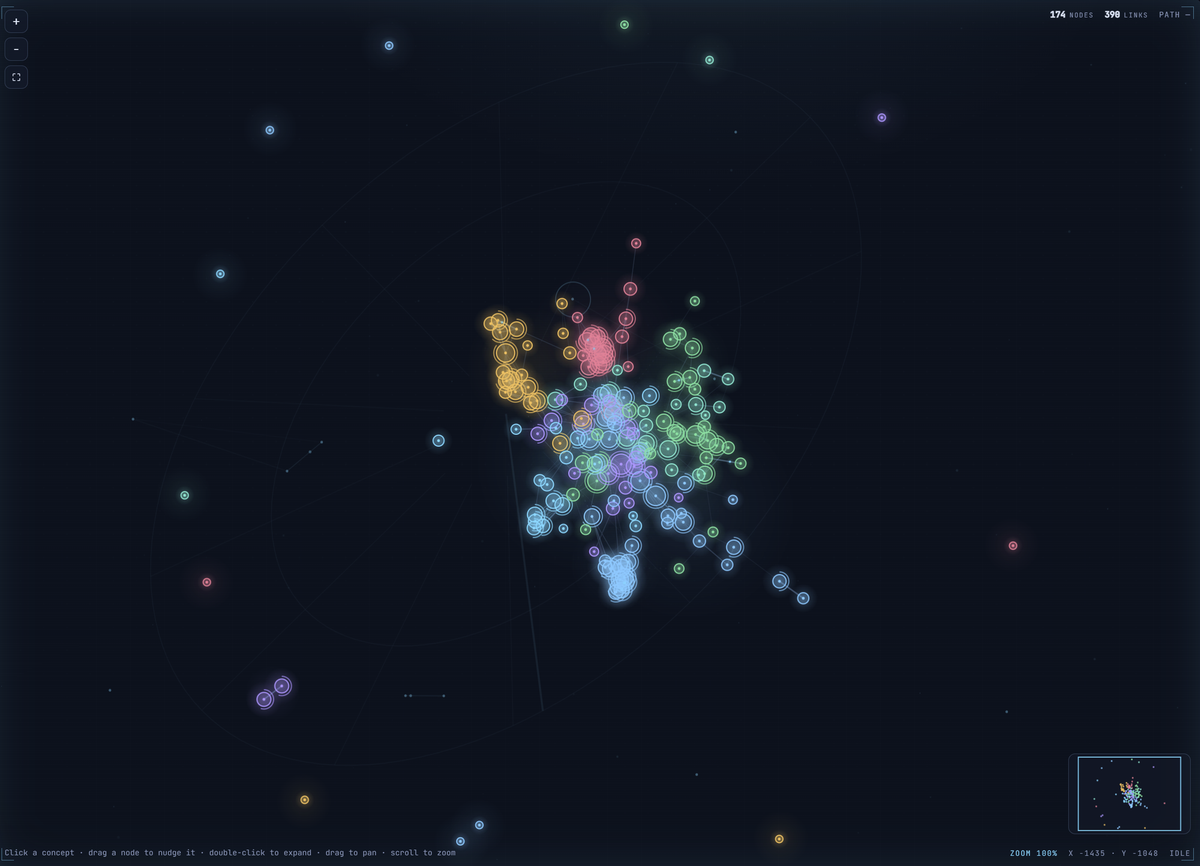
You can also visually explore the relationships between files, topics, people, systems, and other information.


